
Google is constantly updating its algorithms to improve the quality of search results for users. One of the most significant updates that can have a big impact on websites is the core quality update. In this blog post, we’ll explore what Google’s core quality updates are, how they can affect your website’s search ranking, and what you can do to recover from them and avoid penalties. Learn about my Google penalty recovery services.
Google Core Quality Update Penalty Recovery
What are Google Core Quality Updates?
Google core quality updates are significant changes to the search engine’s algorithms that aim to improve the quality of search results. These updates are not related to specific issues like penalties for violating Google’s guidelines or technical errors on a website. Instead, they focus on the overall quality and relevance of content across the web.
Google releases these updates several times a year, and they can have a significant impact on search rankings. Some websites may see a drop in traffic or rankings after a core quality update, while others may see an improvement. The goal of these updates is to provide users with the most relevant and high-quality content possible, which means that some websites may need to adjust their strategies to keep up with the changes.
The first step to Google penalty recovery is to establish if it is an actual Google penalty. Penalties fall under two types: a manual Google penalty as the name suggests is given manually to sites that abused the Google Search Essentials formerly Webmaster Guidelines.

How do Core Quality Updates Affect Your Website?
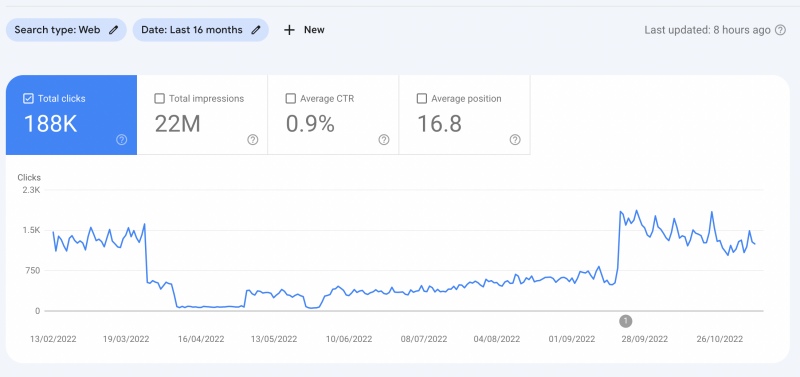
Google core quality updates can affect your website in a number of ways. If your website is affected negatively by an update, you may see a drop in traffic or rankings. This can be a sign that Google no longer considers your website’s content to be as relevant or high-quality as it once was.
If your website is affected positively by an update, you may see an increase in traffic or rankings. This can be a sign that Google now considers your website’s content to be more relevant or high-quality than it was before the update.
My site, ghacks.net, a fairly popular technology news blog, was hit by Google Panda back when the algorithm first hit. It lost a lot of traffic from Google, and I knew that I needed expert help.
I picked Pedro after I read one of his articles on Panda, and how he recovered sites. He is very knowledgeable, analyzed the site and created an actionable list that I worked on. Communication was very good, and he answered questions that I had about certain procedures quickly and efficiently. I can recommend Pedro wholeheartedly when it comes to SEO, and have hired him again already for help in monitoring the site’s move to HTTPS.

Martin Brinkmann
JOURNALIST and SUPER GEEK
How to Recover from Core Quality Updates
If your website is negatively affected by a core quality update, there are several steps you can take to recover:
- Review your content – Take a close look at your website’s content and make sure it’s high-quality, relevant, and up-to-date. If there are any pages or posts that are outdated or low-quality, consider removing or improving them.
- Check for technical issues – Technical issues like broken links, slow loading times, or mobile usability issues can affect your website’s search ranking. Use tools like Google Search Console to identify and fix any technical issues on your website.
- EARN high-quality links – Building high-quality relationships with reputable websites can improve your website’s search ranking. Focus on building relationships with other websites in your industry and creating content that others want to link to.
- Engage with your audience – Engage with your audience through social media, email marketing, and other channels. Encourage them to share your content and leave comments on your website.
- Be patient – Recovering from a core quality update can take time. Keep working on improving your website’s content, building high-quality links, and engaging with your audience, and you should start to see improvements in your search ranking over time.
Book a call back
How to Stay Clear of Penalties
To avoid penalties and stay clear of Google’s core quality updates, here are some tips to follow:
- Create high-quality, relevant content – Focus on creating high-quality, relevant content that provides value to your audience. Avoid thin content, keyword stuffing, and other tactics that can be seen as spammy or low-quality.
- Follow Google’s guidelines – Make sure your website follows Google’s guidelines for webmasters. This includes things like avoiding cloaking, hidden text, and other black hat SEO techniques.
- Stay up-to-date with industry changes – Keep up-to-date with industry changes and best practices for SEO. This can help you stay ahead of the curve and avoid penalties for outdated or spammy tactics
Other Major Google Updates
In addition to core quality updates, Google has implemented several other major updates over the years to improve search results and user experience. These updates aim to penalize low-quality content, spammy SEO tactics, and link schemes while rewarding high-quality, relevant content. Staying up-to-date with Google’s algorithm updates and best practices is essential to ensure your content continues to rank well and provide value to your audience.
Google Panda
Google Panda was first launched in 2011 and has been updated multiple times since then. The update focused on penalizing websites with low-quality content, duplicate content, and thin content while rewarding websites with high-quality, unique, and relevant content. Websites with a high ratio of advertisements to content or with low-quality user-generated content were also affected.
Google Penguin
Google Penguin was launched in 2012 and updated several times until 2016. The update targeted websites that engaged in link schemes, link spam, and other black hat SEO tactics. Websites that purchased links or participated in link exchanges were also penalized. The update aimed to reward websites that had natural, high-quality links from authoritative sources.
Google Hummingbird
Google Hummingbird was launched in 2013 and aimed to provide more accurate and relevant search results. The update improved Google’s understanding of natural language and long-tail queries, allowing for more precise search results. The update also prioritized websites with high-quality, relevant content.
More Recent Google Updates
Google continues to roll out updates to improve search results and combat spam. Here are some recent updates:
| Summary | Date | Duration |
|---|---|---|
| June 2025 core update | 30 Jun 2025 | 16 days, 18 hours |
| March 2025 core update | 13 Mar 2025 | 13 days, 21 hours |
You can check the full list of Google Search ranking updates with links to the respective updates.
In conclusion
Google’s algorithm updates aim to improve search results and provide users with relevant and high-quality content. By staying up-to-date with Google’s best practices and guidelines, website owners can ensure their content continues to rank well and provide value to their audience. With the recent updates targeting product reviews, helpful content, and link spam, it’s essential to follow ethical SEO practices and create high-quality, relevant content to stay ahead of the game.
Book a call back

Top Freelancer SEO Companies UK

Top SEO Agency UK Upcity
Ready to Book?
I look forward to making a difference to your business
